Search
Search
Filter By
Environmental Law Topic
Region
Categories
Tag
The New York Times recently published a column arguing that the movie “Don’t Look Up,” intended as an allegory about American reaction to climate change, really works better as an allegory about our reaction to the Covid-19 pandemic. Douthat, We Need a Second Cut of “Don’t Look Up”, 171 N.Y. Times No. 59,298 (Jan. 9, […]
By: Zach C. Miller
On December 7, 2021, EPA and the Army Corps of Engineers jointly issued a formal Proposed Rule to define “waters of the United States” (WOTUS) regulated under the Clean Water Act (CWA). Comments on the proposal are due by February 7, 2022. Depending on how one counts, this the 8th rulemaking attempt to define WOTUS, […]
The Biden Administration’s April 2021 pledge for new U.S. commitments to the Paris Agreement calls for an 80% reduction of electric power greenhouse gas emissions by 2030. The Administration also is committed to achieving decarbonization of the power sector by 2035. Current climate change proposals in Congress mirror these targets. At the same time, mandates […]
By: Adam Peter Kahn
Each year since 1995, with the exception of 2020, the United Nations Framework Convention on Climate Change (UNFCCC) has hosted a Conference of Parties (COP), where members of the UNFCCC negotiate issues relating to reducing greenhouse gas emissions and other matters relating to climate change. The 26th COP concluded in Glasgow on November 13 with […]
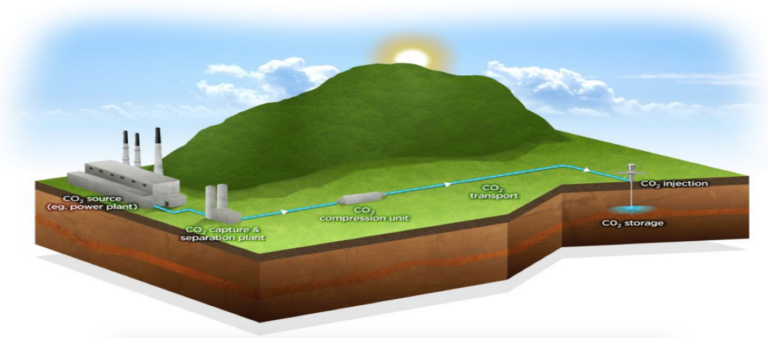
While there are certainly voices that are urging that net-zero CO2 emissions can be achieved without reliance on fossil fuels, the recent events with the electric power grid in Texas are causing many policy-makers to focus attention on modernization of the nation’s fossil fuel energy infrastructure with carbon capture utilization and sequestration (“CCUS”) technology. As […]
By: Seth D. Jaffe
I’ve written a lot about how the developing science around particulate exposure supports making the PM2.5 NAAQS more stringent. So it won’t come as a surprise that a new study published in the Proceedings of the National Academy of Sciences indicates that the benefits of on-road emissions reductions from 2008 to 2017 could be measured in the hundreds of […]

ASTM announced revisions to its standard practice for Phase I environmental site assessments (E1527-21) on November 1, 2021 (the “Standard”). They will take effect on January 1, 2022, with publication and adoption by the U.S. Environmental Protection Agency (“U.S. EPA”) anticipated in due course. Phase I environmental site assessments (“Phase I ESAs”) play an important part […]

The goal of the Clean Air Act’s visibility program is to achieve natural visibility conditions by 2064 in federal Class I areas (basically, national parks). States must show that they are making “reasonable progress” towards that goal in each of a series of ten-year planning periods. States are in the midst of revising their state implementation […]
On November 16, 2021, the First Circuit Court of Appeals issued an opinion reversing a district court’s order enjoining the National Marine Fisheries Service (“NMFS”) rule that barred the use of lobster traps with traditional buoy lines between October 1 and January 31 each year in a 967 square mile area located thirty nautical miles […]
By: Robert Uram
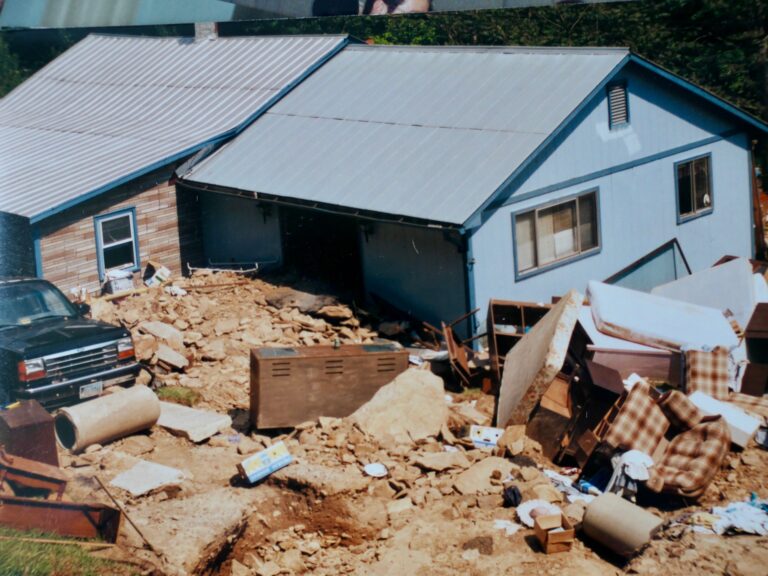
On November 15, 2021, President Biden signed H.R. 3685, the Infrastructure Investment and Jobs Act. Title VII of H.R. 3685 appropriates more than $11 billion and authorizes and requires the Department of the Interior to provide money to eligible States and Indian Tribes for the purpose addressing hazards and reclaiming land and water blighted by abandoned coal […]
The ACOEL Foundation, created by ACOEL, is proud to announce its newly-elected Officers and Advisory Council, all of whom are active members of ACOEL. Their leadership terms began in mid-September and they will each serve a one-year term. Learn about our new Officers.

There is no question the policy considerations underlying Environmental Justice (EJ) are valid. As a society, we need to recognize that some communities are more at risk than others and devise means to mitigate these risks or at least not consciously add to them if possible. But there is a problem – our primary environmental […]
Meet our Fellows
ACOEL fellows are dedicated to maintaining and improving the ethical practice of environmental law, the administration of justice, and the development of environmental law through rigorous focus, outreach and education in all forums — federal, state, municipal, tribal and international.
Visit our Directory
Explore Topics
Fellows of the College are dedicated to maintaining and improving the ethical practice of environmental law and the administration of justice through rigorous focus, outreach and education in a variety of Environmental Law Topics.
Visit our Topic Pages