Search
Search
Filter By
Environmental Law Topic
Region
Categories
Tag
By: Seth D. Jaffe
Greenwire reported today that two medical sterilization facilities in Georgia that had been shut down or had production limited due to concerns about exposures to ethylene oxide would be allowed to increase operations in response to the need for sterilized medical equipment to address the COVID-19 pandemic. The result is not surprising and, one assumes, appropriate in […]
The American College of Environmental Lawyers (“ACOEL”) announces its annual Stephen E. Herrmann Environmental Writing Award (“Herrmann Award”) for the 2019-20 academic year. Stephen E. Herrmann is a distinguished, nationally recognized environmental lawyer. For some forty years, Mr. Herrmann has been a leader in the area of environmental law as a practitioner, teacher, and writer. […]
By: Adam Babich
Data is in from EPA’s “work practice” requirement that petroleum refineries monitor ambient air for benzene concentrations around their fence lines. The regulations set an “action level” of 9 µg/m3 benzene, using benzene as a “surrogate” for fugitive hazardous air pollutants. The purpose? To “protect the health of the populations surrounding the facility, including minority and low-income populations.” EPA set the action […]

By: Peter Van Tuyn
Benjamin Franklin wrote that “an investment in knowledge always pays the best interest.” Just over 200 years later, the United States passed a law that put that sentiment into practice in the context of federal government decision-making that may impact an increasingly stressed environment. The National Environmental Policy Act (NEPA) marked a turning point in […]
By: Robert Uram
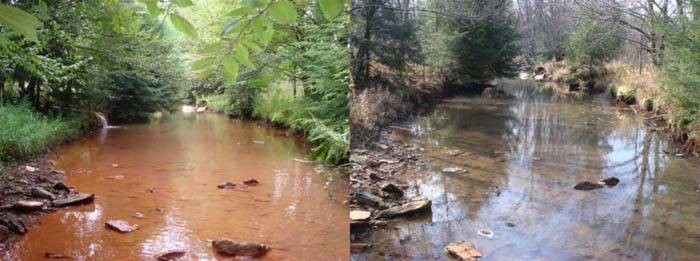
Two promising new technologies—recovery of rare earths from acid mine drainage (AMD and conversion of AMD treatment by-products to paint pigments are bringing new hope to remediating AMD polluted streams. These technologies are a kind of modern day alchemy—restoring streams that are orange and lifeless by turning pollution into economically valuable products and creating new […]
In Washington State, some legislators and regulators have been acting locally. But are they thinking globally? Our two-term governor sought for years, unsuccessfully, to persuade our legislature to authorize a statewide program to reduce carbon emissions. After several unsuccessful attempts, his Department of Ecology passed the Clean Air Rule (Chapter 173-442 WAC), which attempted to […]
On February 3rd, the U.S. Fish and Wildlife Service (USFWS) published a Notice of Proposed Rulemaking that would completely eliminate criminal penalties for “incidental” migratory bird deaths under the Migratory Bird Treaty Act, even when those deaths are foreseeable and preventable. The Migratory Bird Treaty Act (the Act) is a century-old statute with a broad prohibition on […]
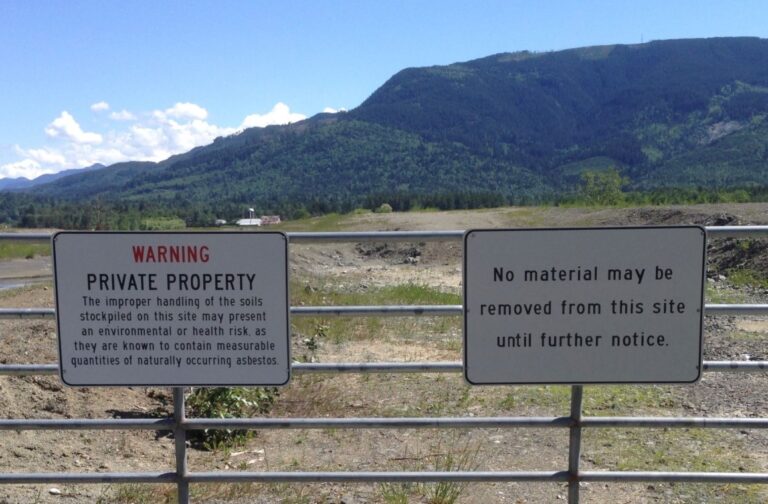
Dredged spoils along the Swift Creek channel; landslide visible at upper right (author photo). Swift Creek. The name evokes a clear, fast-moving mountain stream. The Swift Creek at issue, however, is hardly clear or swift for most of its length. A massive, mile-long landslide hangs at the head of its southern fork, in the foothills […]
By: Scott Fulton
It seems to be the season for 50th anniversaries. The National Environmental Policy Act, signed into law by President Nixon on January 1, 1970, is now a half-century old. The first day of a new decade was no doubt seen as a symbolic moment for NEPA’s signing, but I wonder whether the statute’s framers could […]

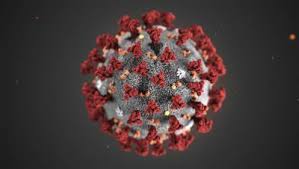
The novel Coronavirus (2019-nCoV) has infected more than 50,000 and killed more than 1,000 persons across China. It has spread in France and England, and elsewhere. We knew “it“ was coming, but naively – if imprudently – we repeatedly hope to dodge the bullet. “It” is the class of viruses exchanged across species, a phenomenon […]
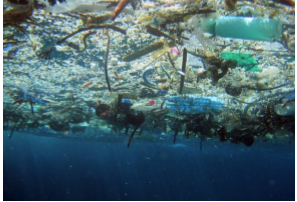
Plastic is a remarkable material that has forever changed our societal expectations regarding the quality of our food, water, health care, safety and products that improve our lives every day. But all good things remain good within limits. For many years now there has been growing recognition that, because plastic does not degrade like natural materials, it is now […]
By: Kenneth Gray
To some, it’s outrageous that PFAS (Per- and Polyflouoroalkyl substances) are omnipresent in the environment, in biota, in drinking water, and in a number of past and present products. All PFAS are highly dangerous some claim (or at least presumptively so), based on data on a limited number of the thousands of compounds. It is […]
Meet our Fellows
ACOEL fellows are dedicated to maintaining and improving the ethical practice of environmental law, the administration of justice, and the development of environmental law through rigorous focus, outreach and education in all forums — federal, state, municipal, tribal and international.
Visit our Directory
Explore Topics
Fellows of the College are dedicated to maintaining and improving the ethical practice of environmental law and the administration of justice through rigorous focus, outreach and education in a variety of Environmental Law Topics.
Visit our Topic Pages