Search
Search
Filter By
Environmental Law Topic
Region
Categories
Tag
By: John Barkett
It seems hard to believe that the Comprehensive Environmental Response, Compensation, and Liability Act (CERCLA)—affectionately known as the Superfund law—will be forty-years old in December 2020. I first became involved with CERCLA in 1981, a few months after the law’s adoption. The State of Florida’s environmental regulatory agency was concerned about a transformer salvaging operation. […]
By: Seth D. Jaffe
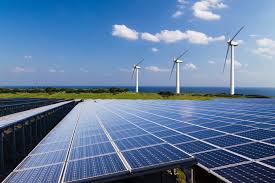
The New York Citizens Budget Commission has released a report regarding the state’s ability to meet its ambitious GHG reduction targets. It’s sobering reading. The CBC states that it is “uncertain” whether New York can meet those goals. It identifies four reasons: Immense scaling up of renewable generation capacity is necessary and is likely infeasible by 2030. The […]
By: Adam Babich
EPA filed a status report on October 15 in the slow-moving mercury and air toxics (MATS) litigation, which is now Murray Energy Corp. v. EPA, No. 16-1127 (D.C. Cir., filed April 26, 2016). The case is a challenge to EPA standards for coal-fired power plants that have been on the books since April 16, 2012, despite […]
Plant closures of medical equipment sterilization facilities in Chicago and Atlanta prompted the Federal Drug Administration to issue a statement on potential shortages of surgical and medical devices across the country. On October 25, FDA Commissioner Sharpless noted the closure of two large sterilization facilities resulting in a shortage of pediatric breathing tubes and said, “The impact […]
These lyrics from the Jersey Girl tune on Bruce Springsteen’s 1984 single echo the summers of his youth spent at the New Jersey shore. I was reminded of Springsteen while reading the book “The Geography of Risk, Epic Storms, Rising Seas, and the Cost of America’s Coasts” written by the Pulitzer Prize-winning journalist, Gilbert M. […]
EPA has been a hive of activity regarding the declining bee population. The agency recently approved an organic fungicide that is to be delivered to crops via “bee vectoring”—a process by which commercially-reared bees walk through trays of pesticide powder, collecting it on their legs and fur. The bees are then released into the wild, […]
If you have wondered if confusion over the jurisdictional reach of the Clean Water Act may drive one to drink, read the transcript in County of Maui v. Hawaii Wildlife Fund, SCOTUS No 18-260, argued on November 6, 2019. The issue in Maui is whether a NPDES permit is required for the discharge of pollutants from injection wells […]
I commend Vicki Arroyo’s recent elegy on the Dissolution of Cooperative Federalism in the Trump Era. both for its eloquence and its restraint. To paraphrase, the Trump Administration’s lawsuit against California’s climate change policies “is just the latest salvo in a sustained, direct assault by EPA and the Administration on the bedrock principles of states’ rights […]
By: Adam Peter Kahn
The Natural Resources Defense Council reports that up to 40% of all food in the United States is wasted, even as 40 million Americans lack consistent access to adequate and nutritious food. Donation of useable food has palpable and obvious social benefits. Recovering (or rescuing) edible food from restaurants, groceries and institutions that would otherwise go to […]
By: Richard M. Glick
On December 9, the Supreme Court denied certiorari to review the D. C. Circuit Court of Appeals ruling in Hoopa Valley Tribe v. FERC. As reported in this space, in January the D.C. Circuit roundly rejected the common practice of withdrawing and then refiling applications for state water quality certification to avoid the one-year limit for state […]
Chances are if you have been on either side of a settlement for an environmental violation over the past 20 years, you have discussed and/or negotiated a supplemental environmental project (SEP) as part of the overall resolution of a matter. SEPs are projects that go beyond what is required by law, although the projects do […]
By: Michael Gerrard
We know that, mostly as a result of climate change, extreme weather events are becoming more frequent and severe. Reducing greenhouse gas emissions should be the highest priority, but that won’t be enough to prevent severe impacts, some of which are already occurring. Here are twelve ways the law can help society cope with these […]
Meet our Fellows
ACOEL fellows are dedicated to maintaining and improving the ethical practice of environmental law, the administration of justice, and the development of environmental law through rigorous focus, outreach and education in all forums — federal, state, municipal, tribal and international.
Visit our Directory
Explore Topics
Fellows of the College are dedicated to maintaining and improving the ethical practice of environmental law and the administration of justice through rigorous focus, outreach and education in a variety of Environmental Law Topics.
Visit our Topic Pages