Search
Search
Filter By
Environmental Law Topic
Region
Categories
Tag
By: David Uhlmann
On April 30, 2019, Maine Governor Janet Mills signed into law An Act to Prohibit the Use of Certain Disposable Food Service Containers, making Maine the first state in the nation to ban polystyrene foam (more commonly called Styrofoam) use in disposable food service containers – coffee cups, takeout containers, packaged meat trays, egg cartons and the like. […]
By: Richard G. Stoll
For anyone serious about climate policy, I highly recommend Bob Sussman’s Comment in the May 2019 Environmental Law Reporter. Sussman, a former high-ranking EPA official in the Clinton and Obama Administrations, has produced an amazingly comprehensive review of where we have been and where – in his view – we should be going with climate policy […]
Citing cooperative federalism, the Environmental Protection Agency (EPA) Region 6 Regional Administrator has proposed to withdraw the agency’s 2015 determination that the affirmative defense provisions in Texas’ State Implementation Plan (SIP) applicable to excess emissions that occurred during upsets and unplanned events made the SIP substantially inadequate to meet Clean Air Act (CAA) requirements. 84 FR […]

By: Seth D. Jaffe
After receiving an analysis showing that shutting the Jim Bridger and Naughton coal-fired electric generating plants in Wyoming would save ratepayers money, PacificCorp, the owner of the plants, announced that it would shut the plants and the mines that supply them as early as 2022. Mark Gordon, the Republican Governor of Wyoming is not happy. According […]
By: Ronald R. Janke
The Flint water crisis began in April 2014 when the City of Flint switched its source of drinking water from Lake Huron to the Flint River without installing corrosion control treatment to protect against lead and other chemicals leaching from pipes into tap water. The need for corrective action was elevated on September 24, 2015, […]
By: Philip Tabas
Conservation easements have become the most popular approach for protecting lands, water, wildlife and historic structures in the US. Thanks in large part to the Federal income tax deduction for gifts of permanent conservation easements enacted in 1980, over 27 million acres of private lands and the wildlife on them have been protected across the […]
By: Richard M. Glick
As part of the Administration’s policy in favor of domestic oil and gas development, President Trump issued an Executive Order on April 10 “Promoting Energy Infrastructure and Economic Growth.” The EO seeks to make the regulatory process more efficient and to create “increased regulatory certainty.” A policy focus in the EO is water quality certification under […]
By: David B. Farer
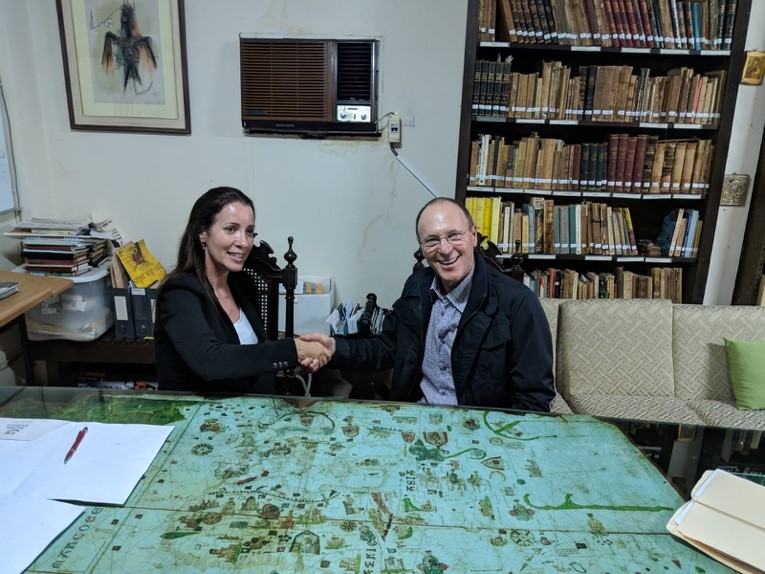
For the past three years, the Cuba Working Group of the ACOEL International Pro Bono Committee has been making concerted efforts to establish a formal relationship with a Cuban entity that will allow Fellows of the College to engage in pro bono activities to assist the Cuban people in addressing particular environmental concerns and issues. […]
By: Susan M. Kath
Professor John Knox, former UN Special Rapporteur for Human Rights and the Environment, began in 2012 to study the obligations relating to the enjoyment of a safe, clean, healthy and sustainable environment, as part of the United Nations Human Rights Council special procedures. When his two terms ended in 2018, he had mapped the statements of human […]
With apologies to Bob Dylan for taking the name of his song out of context, hard rains are going to fall, and some developers of utility-scale solar projects seem to have underestimated the damage that such rains can cause. Over the past several years, a number of large scale solar projects in Connecticut have discharged […]
By: Peter Van Tuyn
On the last Friday in March, Judge Sharon Gleason of the Federal District Court for the District of Alaska issued two opinions in closely-watched cases* concerning federal public lands and waters in and offshore of Alaska. In both cases, the Trump administration’s actions were overturned by the court, having immediate impact on two State of […]
By: Alan Perkins
When an oil and gas operator obtains all proper permits for a saltwater disposal well and responsibly injects fluids into the approved deep subsurface formation, and some of the injected fluid ultimately migrates laterally within the permitted injection formation beneath the lands of another, has the operator committed an actionable trespass? And if so, what […]
Meet our Fellows
ACOEL fellows are dedicated to maintaining and improving the ethical practice of environmental law, the administration of justice, and the development of environmental law through rigorous focus, outreach and education in all forums — federal, state, municipal, tribal and international.
Visit our Directory
Explore Topics
Fellows of the College are dedicated to maintaining and improving the ethical practice of environmental law and the administration of justice through rigorous focus, outreach and education in a variety of Environmental Law Topics.
Visit our Topic Pages