EPA and the Army Corps of Engineers have published their most recent attempt to define a “Water of the United States” within the jurisdiction of the Federal Clean Water Act. As many of you know, WOTUS regulations have come and gone over the past forty years, including anything but durable regulations during the Obama, first Trump and Biden Administrations.
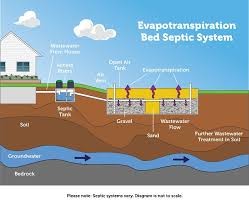
Unlike the last bite at the WOTUS apple by EPA during the Biden Administration, EPA and the Corps are soliciting public comments on this proposed regulation. One comment EPA will undoubtedly receive is that its proposed regulation doesn’t go far enough (or even as far as EPA went in the first Trump Administration) to exempt from Clean Water Act jurisdiction discharges of treated effluent from wastewater treatment facilities to the ground, and ultimately to groundwater.
Both before and after the United States Supreme Court’s 2020 opinion in Hawaii Wildlife Fund v. Maui, discharges of treated effluent from wastewater treatment facilities have been the subject of many citizen suits brought under the Clean Water Act.
In Maui, the United States Supreme Court held that the Clean Water Act requires a difficult to obtain NPDES permit for discharges to groundwater that are the “functional equivalent” of a direct discharge to a Water of the United States. As a result, the County of Maui was required to obtain a NPDES permit for its injections of treated effluent from its wastewater treatment facility into wells sufficiently close to the Pacific Ocean that the injections were deemed to be the functional equivalent of a discharge to the ocean.
Less than a year before Maui was decided, EPA had issued an Interpretive Statement concluding that releases of pollutants to groundwater were excluded from the reach of the Clean Water Act even if the pollutants were conveyed to jurisdictional surface waters via groundwater.
Despite the intervening Maui decision, the newly proposed regulation once again excludes groundwater from the definition of Waters of the United States subject to Clean Water Act jurisdiction. In addition to being consistent with EPA’s position during the first Trump Administration, this proposal is also consistent with the 2023 view of Justices Thomas and Gorsuch, in Sackett v. EPA, that Congress’s legislative authority is constitutionally limited to regulating water “channels-of commerce.” Importantly, that concurring view of Justices Thomas and Gorsuch in Sackett was also the dissenting view of Justice Thomas three years earlier in Maui.
EPA and the Corps say that the current jurisdictional proposal is “intended to appropriately limit the scope of Federal authority consistent with the centuries-old boundaries of Congress’s Commerce Clause authority,” explicitly referencing Justice Thomas’s concurring opinion in Sackett, and by implication his dissenting opinion in Maui. In fact EPA and the Corps mention the Supreme Court’s “seminal” opinion in Sackett over 100 times in their current proposal.
Of course, the Supreme Court that decided Sackett was much different than the Supreme Court that just a few years earlier decided Maui. The opinion of the Court in Sackett was authored by Justice Alito, and joined by Chief Justice Roberts, Justice Gorsuch and Justice Barrett in addition to Justice Thomas. That majority opinion is very similar in substance to Justice Alito’s dissenting opinion in Maui.
But, in a footnote in EPA’s and the Corps’ proposed regulation, EPA and the Corps say that “the Clean Water Act . . .. regulates discharges of pollutants from “point sources” to “navigable waters” whether the pollutants reach jurisdictional waters directly or indirectly” (emphasis added), citing the Supreme Court’s majority opinion in Maui. This certainly reads as if EPA intends to have at least some discharges to groundwater continue to be covered by the Clean Water Act, contrary to its 2019 Interpretive Statement and the views of at least two of the Justices in the Sackett majority.
EPA should clarify its view on this very important topic so that, in the inevitable litigation over this most recent proposal, the Courts can understand it and evaluate its basis.