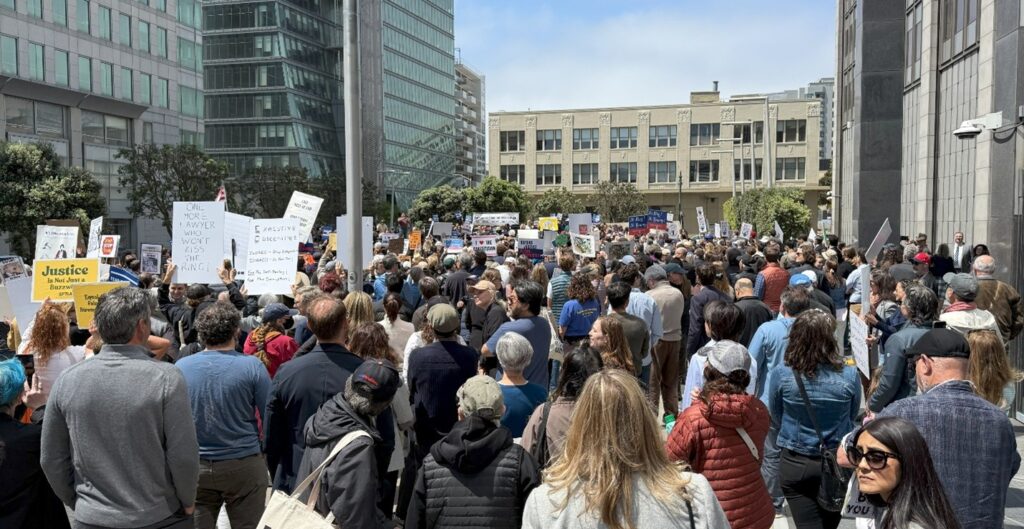
May 1 was National Law Day – a day to celebrate the role that law and lawyers serve to protect legal rights and to defend the independent judicial system that keeps our democracy vibrant. Since 1958 when President Eisenhower first proclaimed it, bar associations and lawyers have usually marked the day quietly. This year’s celebration, however, had a raucous tone as lawyers gathered in demonstrations in 50 cities throughout the United States to support the rule of law, the independence of judges and the importance and sanctity of the attorney-client relationship.
ACOEL stands at the middle of this debate. Under our bylaws, ACOEL Fellows dedicate themselves to maintain and improve high standards for the practice of environmental law, ensure the administration of justice and ethics of our profession, and contribute to the development of environmental law. We strive for these goals within a collegial home that allows all of us to speak freely and constructively with each other, whatever our political or cultural beliefs.
The College has always focused on identifying and supporting the strongest environmental policies consistent with democratically expressed preferences and sound principles of governance and administration. But even the strongest and best environmental laws and policies mean little if we don’t have a stable and independent judiciary to implement them fairly and effectively. Environmental law, in the end, is as much about law as it is the environment.
We may disagree on the wisdom of specific environmental policies or regulatory initiatives. But all of us, I believe, support the importance of the rule of law. Effective environmental protection requires stability, fairness, and institutional commitment to long-term goals. Even if our Fellows debate the necessary depth of environmental reviews or the valid scope of executive discretion in implementing environmental laws, we still share a belief in core concepts that remain at the center of environmental law as an instrument of the rule of law.
Our current situation challenges exactly those beliefs. Whether we agree or not with the policy goals of current federal actions, the institutional core of federal environmental law has faced an onslaught from executive actions without fair opportunity for congressional approval or thorough judicial review. The disruptions include widespread and unpredictable staffing losses and threatened budget cuts in core agencies, novel changes to administrative procedures that minimize the role of public input and transparent agency deliberation, actions against law firms based on their representation of disfavored clients, and executive demands for increased federal oversight and control over iconic academic institutions. These unilateral changes, rapid and unprecedented, have reshaped federal and state environmental frameworks at a pace and scope that we have rarely – if ever – seen.
ACOEL occupies a special place as a nonpartisan organization dedicated to sharing its members’ deep expertise and its desire to carefully protect the rule of law as a pillar of environmental protection. We look forward to discussing future actions, if any, that the College should take. As an initial step, we support the preparation of a letter for ACOEL members to join, if they wish, in their individual capacities. We can also set aside time at our upcoming Midyear Meeting to discuss how the College should respond to the current spate of executive activities. During that discussion, we can also overview the bylaw procedure for reviewing and adopting official positions on behalf of the organization.
Most of all, we need to preserve the unique and special nature of the College as a home for free, rigorous, and respectful debate and action. Colleges must be, at their core, collegial. We should always treat each other as equal partners deserving of our full respect and attention. As we navigate these challenging times, we should hold fast to this unique identity and pursue those actions that the College can do best.