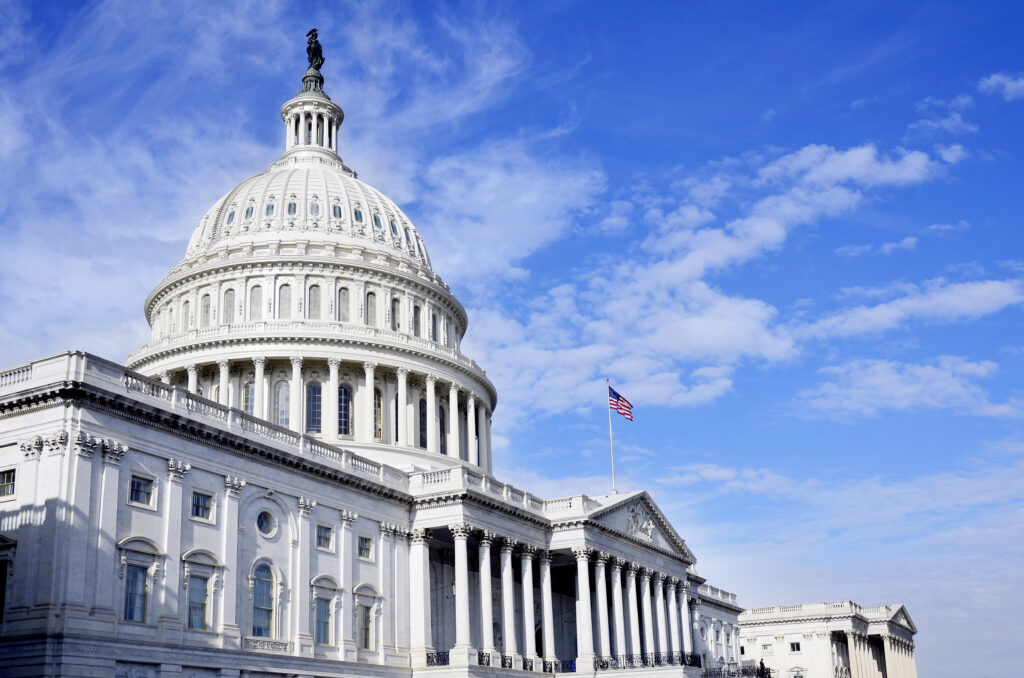
Congress should amend one word in the Administrative Procedure Act of 1946 (“APA”) in order to save the entire oil and gas industry in the western United States and the federal government’s and western state’s coffers. Litigation and judicial interpretation of this one word has frozen the federal oil and gas leasing program, impacting permits to drill in five states — Wyoming, Montana, Idaho, Utah and New Mexico. It is time for Congress to step in and save the day.
The APA has been amended multiple times during its 78 years of existence. Among its most impactful provisions is its remedy provision that a “reviewing court shall . . . . hold unlawful and set aside agency action, findings, and conclusions found to be . . . arbitrary, capricious, an abuse of discretion, or otherwise not in accordance with law.” 5 U.S.C. §706(2) (emphasis added). The word “shall” is the key word.
The current crisis evolved from a series of lawsuits filed by environmental groups opposed to the continuing use of fossil fuels in the United States. The initial lawsuits, filed in Idaho[1] and Montana[2] federal district courts, challenged the validity of federal oil and gas leases issued during the Trump Administration. Additional lawsuits, filed in the District of Columbia federal district court, similarly challenged the validity of leases issued during the Biden Administration.[3] These challenges alleged violations of a variety of environmental laws by the Department of the Interior’s Bureau of Land Management (“BLM”), including the National Environmental Policy Act (“NEPA”) of 1970, when it issued the leases.
Three different federal court judges held that violations of NEPA occurred for a variety of reasons.[4] But instead of halting further development of the leases and giving BLM an opportunity to cure the designated NEPA violations, the Courts vacated the leases, relying on the APA remedy provision and specifically the word “shall.” These actions, known as vacatur, impacted hundreds of leases owned by dozens of oil and gas companies, both large and small, across the five western states previously mentioned. Many of these leases had already been drilled and developed at great cost to the lessees. The production from these wells not only supplied refineries with product but provided millions to the U.S. Department of the Treasury (Treasury) and individual state treasuries due to the royalty payouts associated with standard lease provisions.
This draconian result emanated from the courts’ agreement with the environmental plaintiffs that vacatur is the first and foremost remedy for an agency violation of NEPA. These judges determined the APA statute’s inclusion of the word “shall,” created a strict presumption for vacating the leases. The United States, State of Wyoming and a multitude of industry associations and individual companies pleaded to no avail for the courts to remand to BLM with instructions to correct the NEPA deficiencies.
The Idaho and Montana decisions were appealed by the United States, State of Wyoming, and the oil and gas companies to the Ninth Circuit where oral argument was heard on May 6, 2021, and September 29, 2023. No opinion has been issued as of this writing. In turn, the District of Columbia district court has asked the parties to brief the issue of whether it should vacate BLM’s approval of the oil and gas companies’ project, covering over 50,000 acres of federal mineral estate in Wyoming and the drilling of approximately 500 wells per year over 10 years. The importance of this project to Wyoming in regard to jobs and tax revenue cannot be overemphasized. Yet, the handwriting is on the wall. In the court’s previous grant of summary judgment to the environmental groups’ motion, it stated in regard to the issue of remedy that “ordinary practice is to vacate unlawful agency action,” relying on D.C. Circuit Court of Appeals cases holding that “vacatur is the normal remedy.”
Consider the consequences of the “shall” presumption. Undeveloped and valuable vacated lease acreage goes back into BLM’s inventory. But, what of the developed leases? After all, the NEPA violation was caused by the lessor the United States, not the lessee companies. Who is to pay for the removal of the drilling pads; pulling of the pipe and gathering lines; hauling away of the holding tanks; and reclamation of the surface? Major companies will suffer huge financial losses if their appeals are unsuccessful. Small companies will fare far worse and likely avoid future leasing of federal lands. Nor is the use of the “shall” presumption limited to the oil and gas industry. Opponents of federal agency permitting for wind farms, solar farms, underground pipelines, overhead electric wires, and geothermal projects will likely also seek vacatur in their lawsuits against the United States.
What then is the remedy to vacatur? An amendment to 5 U.S.C. §706(2), changing the word “shall” to “may,” would at least remove the presumption in favor of vacatur and, accordingly, give the government and impacted lessees a chance to argue on a case-by-case basis for remand to the agency to study and hopefully cure the deficiency. Courts would then have statutory-cover to exercise discretion in devising a remedy by taking all factors into account. Egregious NEPA violations could still result in vacatur. But less severe, fixable violations, where harm is not ongoing, could then be addressed as a “do-over” by the offending agency. The Courts would still have the opportunity to review the agency’s revised documentation.
Of course, passage of any new legislation involving the environment, energy and natural resources through a partisan Congress is problematic. However, the ongoing damage being done to the oil and gas industry, the U.S. Treasury and western state budgets, and the nation’s oil supplies, transcends political party disputes. Republican and Democrat governors and legislators alike are feeling the financial impact on their states. Citizens of all political stripes will be negatively affected. In these dire circumstances, perhaps a bipartisan coalition of lawmakers can successfully change one word in the APA. If not, there shall be a reckoning of a hugely consequential nature down the road. If so, the oil and gas industry may survive to meet the nation’s energy needs.
[1] Western Watersheds Project v. Zinke, et al., (Case 1:18-cv-00187-REB).
[2] Montana Wildlife Federation, et al. v. David Bernhardt, Sec’y of Interior, et al., (Case No. 4:18-cv-00069-BMM).
[3] Powder River Basin Resource Council, et al. v. U.S. Dept. of Interior, et al., (Case No. 22-cv-2696-TSC).
[4] BLM’s NEPA Environmental Impact Statements were found deficient for utilizing the wrong storage value for groundwater modeling and insufficient study of the impacts of drilling on sage grouse habitat.