Remember the alliteration in this Blog’s title learned in childhood?In 2025 we have a great many “de” actions in our personal and professional lives. For those of us thinking of “downsizing” from our long-owned but now too-large homes, we must “declutter” our prized possessions, decontaminate our basements and attics, and deactivate our internet and utility accounts before we can decamp to smaller quarters or debark to different states without debate.
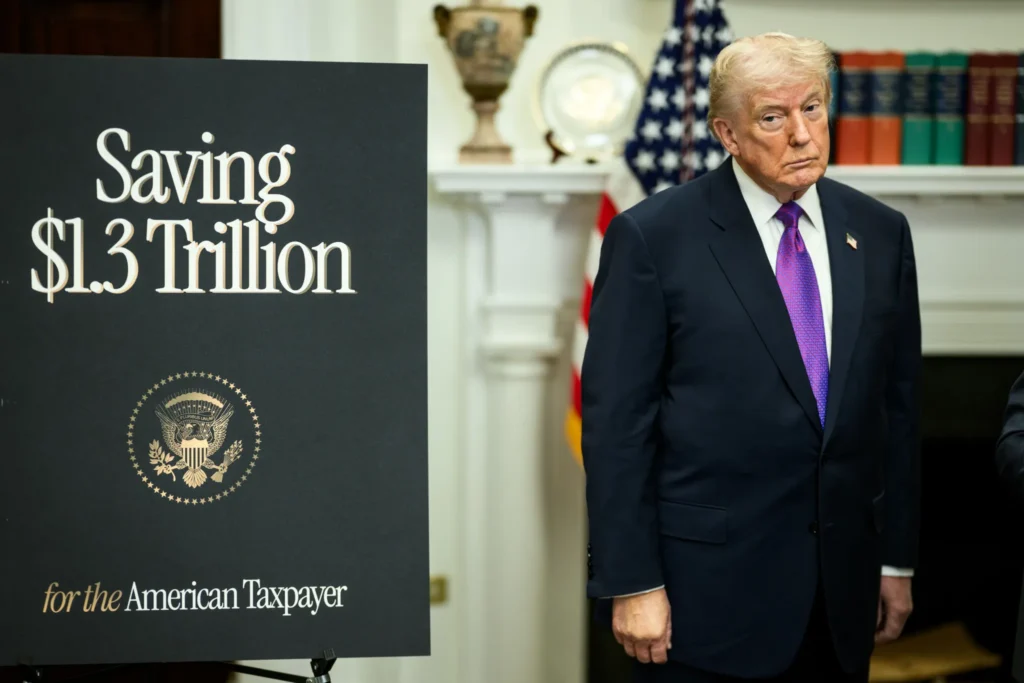
Likewise, on October 11, the Office of Management and Budget issued a major De Memorandum, entitled “MEMORANDUM FOR: REGULATORY POLICY OFFICERS AT DEPARTMENTS AND AGENCIES AND MANAGING AND EXECUTIVE DIRECTORS OF COMMISSIONS AND BOARDS”, with the Subject as “Streamlining the Review of Deregulatory Actions”.
OMB first details the January 31, 2025 Executive Order 14192, Unleashing Prosperity Through Deregulation, which in part requires that for every one new regulation issued, at least 10 existing regulations must be repealed to deconstruct and decelerate the over-reach of Departments’ voluminous regulations that are deterring beneficial development, thereby depriving and not delivering needed benefits.
To deter agency delay tactics, now there will be new presumptive timelines for review by the Office of Information and Regulatory Affairs: “OIRA is imposing a presumptive maximum 28-day OIRA review period for deregulatory actions that are executed with factual records…and a presumptive maximum 14-day OIRA review period for facially unlawful rule. (emphasis in original) Likewise, despite determined delay-tactics, agencies now are to presume that, for example, past tribal consultation and takings Executive Order are not triggered by deregulatory actions.
Next, determined to deepen agency initiatives, facially unlawful regulations are to be destroyed without prior notice and comment procedures. If the regulation is unlawful, as — for example — “where the rule is inconsistent with the ‘single, best meaning’ of the statute under Loper Bright, direct repeal under the APA’s ‘good cause’ exception is appropriate.” Moreover, “Another example of a facially unlawful regulation is where a rule violates the major questions doctrine explicated in West Virginia v. EPA, 597 U.S. 697 (2022).”
Moving on, the Memo describes the need for “robust cost-benefit analysis (where such quantification is conceptually possible and useful data exists) as a way to buttress records in facially illegal deregulatory situations”, in order to avoid claims of deceit or deception.
OMB then delineates the “benefits and uniqueness” of de-rulemaking, claiming that “deregulation has important, unique impacts that could be given weight in decision making, which agencies often do not consider.” First, deregulation “increases the scope of private freedom, which can sometimes be quantified (and thus should be, whenever possible), but in other cases the value of deregulation can only be assessed qualitatively.” In either case, deregulation is said to “leave more individuals and firms free to pursue their own self-defined interests, unfettered by regulation.”
Second, per OMB, decentralizing and defenestrating overly burdensome government regulation can have “aggregated impacts”—such as for deregulating the energy sector, “which will not simply make driving cars and use of electricity to power our homes less costly, it also benefits America’s tech sector, increasing AI innovation and improving (not degrading) development of new cryptocurrency assets — benefits that in turn would further profit consumers in a ‘virtuous cycle’” [a delicious concept].
How will these OMB and OIRA efforts impact initiatives to decarbonize, to reduce deforestation, and to decapitate wind and solar efforts by decertifying already-issued permits and leases? Or impact how the despicable Daffy Ducks’ de fences against Elmer Fudd’s proposed decapitation are determined?
All to be determined. De end.