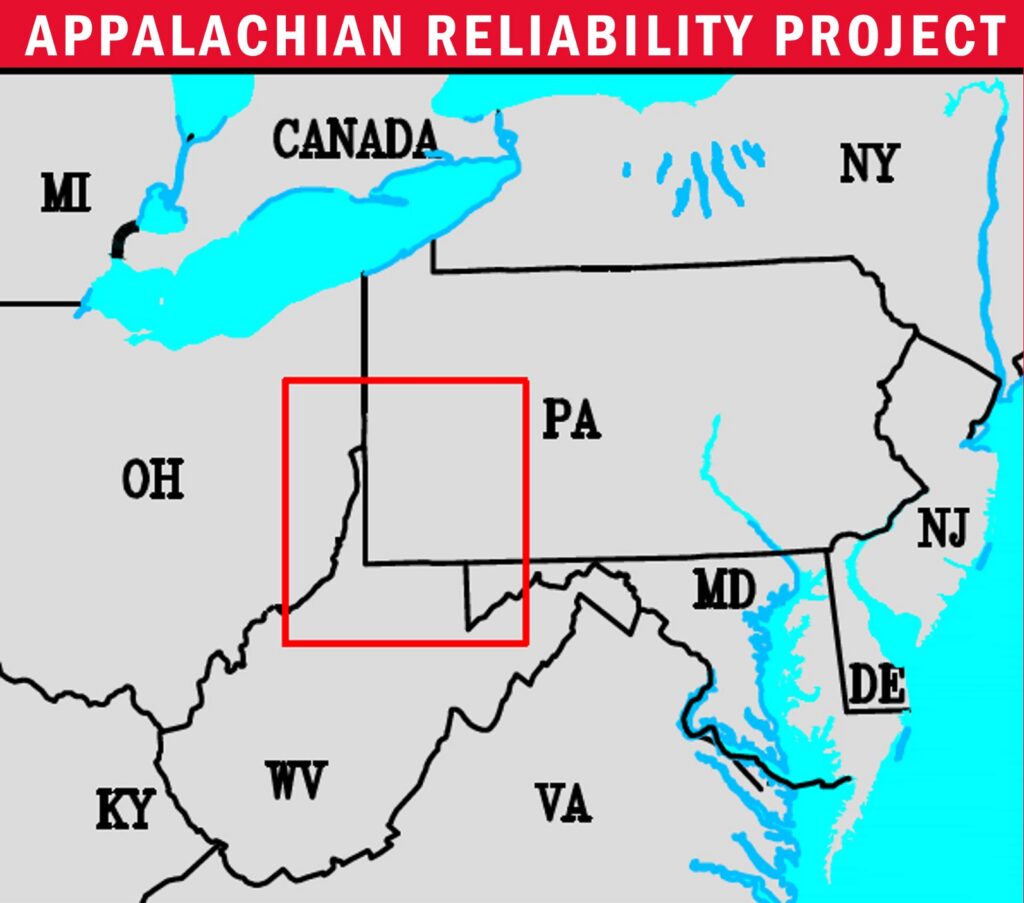
The Federal Energy Regulatory Commission (FERC) issued an order on June 18, 2026, granting the Eastern Gas Transmission and Storage, Inc. application requesting authorization to construct, operate and maintain certain facilities located in western Pennsylvania and eastern Ohio (Appalachian Reliability Project). Docket No. CP25-528-000. Appalachia is rich with abundant natural resources where the National Environmental Policy Act (NEPA) implementation process has learned many lessons. This FERC grant is subject to certain conditions, many of which target environmental stewardship. A careful reading of the terms and conditions may serve to foster a refreshed dialogue about innovative implementation. Maybe, the National Environmental Policy Act (NEPA) implementation can experience change while maintaining its statutory goals.
The Environmental Analysis portion of the order quickly turns to the National Environmental Policy Act of 1969 (NEPA) and maintains course, winding along a NEPA path. Quoted highlights of the narrative include:
- We agree with the substance of staff’s analysis in that [cumulative effects] section, but we observe that NEPA contains no reference to cumulative effects. ¶ 25.
- Commission staff could not determine whether the effects from greenhouse gas (GHG) emissions attributable to the project would be significant or insignificant . . . We note that NEPA does not require that the Commission formally label project-related GHG emissions as significant or insignificant. See Citizens Action Coal. Of Ind., Inc. v. FERC, 125 F.4th 229, 241-242. (D.C. Cir. 2025) (holding that “the absence of a ‘significance’ label does not violate NEPA, CEQ guidance, or FERC regulations.”). ftn. 51.
- In our view, moreover, the procedural exercise of identifying a distinct and separate category of cumulative effects has proven to ultimately disserve NEPA’s goal of supporting environmentally informed decision making without imposing undue procedural burdens. See generally Dep’t of Transp. v. Pub. Citizen, 541 U.S. 752, 767 (2004).
- NEPA requires an analysis of the reasonable foreseeable effects of “the project at hand,” not effects of separate projects. Seven Cnty. Infrastructure Coal. V. Eagle Cnty., Colo., 605 U.S. 168, 182, 187 (2025).
One might assume all environmental protections are lost with the new skinny NEPA perspective, however, a read of 21 single-spaced pages of the Order and Appendix titled “Environmental Conditions” indicate at least some legally enforceable environmental performance criteria remain. These environmental conditions place the statutory, regulatory, contractual, economic, reputational, and administrative burden of environmental stewardship squarely upon the shoulders of Eastern Gas with a specific self-reporting biweekly burden. Clearly the regulatory agencies represent the backbone of environmental law, but this Order is about the applicant’s obligations. The details are as follows:
- Procedures and Measures. Comply with construction procedures and mitigation measures (found in application, supplements, responses to staff and noted in Environmental Assessment.)
- Unforeseen Environmental Impacts. Director of Office of Energy Projects is empowered with stop-work authority and may impose any additional measures to avoid or mitigate unforeseen adverse environmental impacts.
- Open and Notorious Environmental Inspector. Eastern Gas shall file an affirmative statement, certified by a senior company official, that all company personnel will be informed of the environmental inspector’s authority before becoming involved in this project.
- Precisely Delineated Survey and Map of Approved Project. Before the start of construction, a detailed survey with all facilities approved noted shall be filed and used as the reference for environmental conditions implementation or approved modification.
- Eminent Domain Limited to Survey and Map. Eastern’s right of eminent domain must be consistent with these authorized facilities and locations (see survey) and may not be increased for future needs.
- Management of Certain Realignments Needed to Address Outside Influences. Eastern Gas shall seek approval for any realignments or relocations with description of the existing land use/cover type, documentation of landowner approval, whether any cultural resources or federally listed threatened or endangered species would be affected, and whether any other environmentally sensitive areas are within or abutting the area. This includes changes from: cultural resources mitigation, implementation of species mitigation measures, recommendations by state regulatory authorities; and agreements with landowners that affect other landowners or sensitive environmental areas.
- Written Implementation Plan Noting Environmental Specifics. Eastern Gas shall file an implementation plan (construction plans and mitigation measures, contract requirements, including penalties related to implementation thereof, number of environmental inspectors assigned, list of company personnel to receive copies of approvals, environmental compliance training schedule with dates and locations, Eastern Gas company personnel with compliance responsibility, non-compliance procedures and penalty assessments, project scheduling diagram with key implementation, start, and completion dates.
- Full-Time Environmental Inspector and Enforcer. Eastern Gas shall employ at least one full-time Environmental Inspector responsible for compliance with all authorizations, evaluation of contractors’ environmental mitigation implementation, enforcement authority to correct acts that violate environmental authorizations, document compliance, and maintain status reports.
- Bi-Weekly Status Reports. Updated status reports are due to the Secretary biweekly on efforts to obtain federal authorizations, construction status, problems encountered, correction actions and effectiveness, landowner/ resident complaints and response, and copies of correspondence received from any agency on noncompliance and response.
- Written Authorizations in Hand, Always. Written authorizations must be received from the Director of OEP before commencing construction of any project facilities or placing the project into service.
- Corporate Certification of Compliance. Within 30 days of placing the authorized facilities into service, a senior company official shall file an affirmative statement of certification of compliance.
- Water Quality Certification and Conditions Mandatory. Within 5 days of receipt of a water quality certification issued by PADEP, Eastern Gas shall file the complete certification. All conditions attached to the certification shall be mandatory conditions.
- Noise Survey and Mitigation. Eastern Gas shall file a noise survey no later than 60 days after placing the unit at Mullet Compressor Station or the JB Tonkin Compressor Station in service. If noise level exceeds 55 dBA at any nearby NSAs, a report of changes is required along with a follow-up noise survey.
This Order works to create a tangible and practical environmental regimen that will minimize and eliminate potential environmental, social, and economic effects of a major federal action. The actionable list is a thoughtful one, worth preserving and pondering. This Order will serve to invite other creative inputs. Maybe NEPA implementation can experience change while maintaining its statutory goals.